
The Best Sulfate MGO Board Pricing and Quality: How to Spot a Real Manufacturer vs Trader in China

When sourcing high-performance magnesium-based building materials, finding the best sulfate MGO board manufacturer in China is critical to securing stable commercial pricing and uncompromised structural quality. As global demand for chloride-free, non-corrosive Basic Magnesium Sulfate Cement (BMSC 517) boards grows—particularly for light gauge steel (LGS) framing and modular construction in North America and Australia—the Chinese market has become flooded with trading companies posing as direct factories.
For international procurement managers and structural engineers, buying from a middleman isn't just a pricing issue; it introduces massive risks in chemical stability, phase-control continuity, and structural predictability.
Here is the technical and commercial blueprint to help you distinguish between a genuine automated production facility and a third-party trader for the authentic of Chloride-Free MGO Board and BMSC 517 board supplier.

1. The Production Blueprint: Continuous Automation vs Manual Clones for the best sulfate mgo board manufacturer in China
The single biggest indicator of a real manufacturer is the scale and mechanism of their production line.
The Trader's Source (Manual/Semi-Automated Workshops): Many trading companies source their boards from small-scale workshops that rely on manual pouring and basic static molds. These operations cannot guarantee uniform density or precise layer alignment.
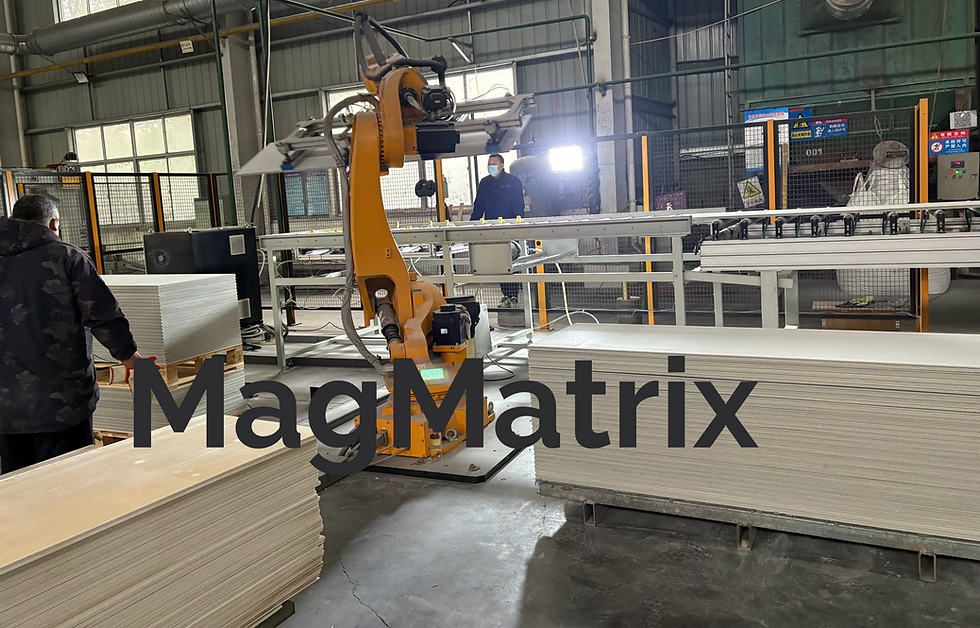
The Real Manufacturer (Continuous Automation): A true industry leader operates a fully automated, continuous extrusion and rolling production line. This ensures consistent mechanical properties, perfectly uniform fiber-mesh tension, and exact thickness tolerances across high-volume runs.
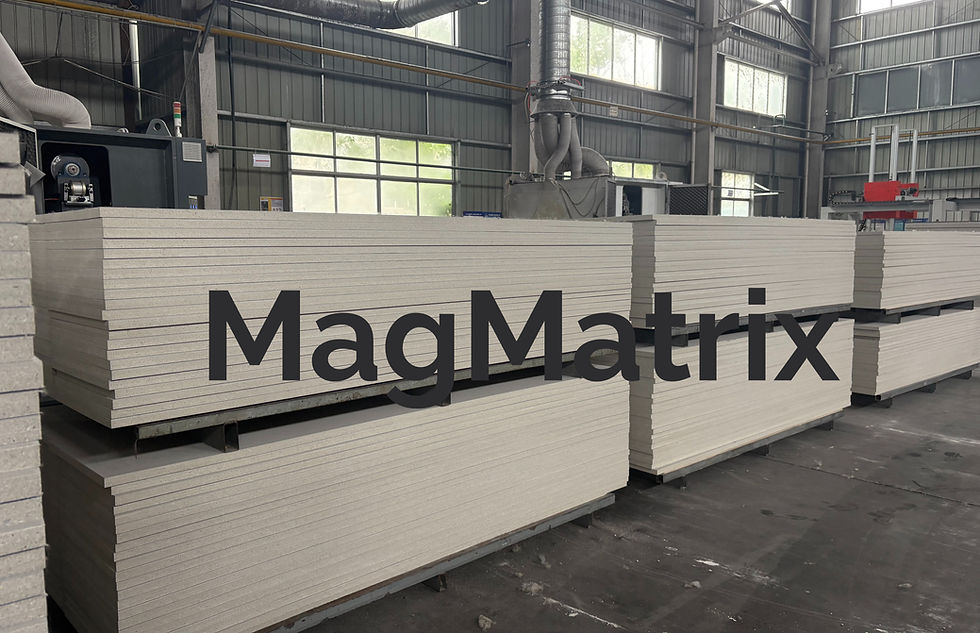
The Verification Checklist: Ask for an unedited, continuous smartphone video walkthrough of the production line. Specifically look for automated raw material dosing systems, continuous rolling machinery, and automated cutting stations rather than isolated stacks of finished boards of Non-corrosive MGO board.
2. Chemical Competency: Ask for the Exothermic Heat Curve
The crystallization of the 5-1-7 phase (5Mg(OH)2-MgSO4-7H2O) is a highly exothermic chemical reaction. Managing the thermal peak during hydration determines whether the board achieves high structural capacity or becomes brittle and cracks.
How to Spot a Trader: If you ask their technical sales team about their molar ratio math or how they regulate the exothermic hydration curve during the initial set, a trader will give vague, generalized marketing answers ("our quality is top tier"). They do not own the process.
How a Real Manufacturer Responds: A real manufacturer's engineering team can immediately discuss their specific curing parameters—such as maintaining a controlled 60°C initial set temperature followed by active fan-cooling to suppress micro-cracking, and their mandated 8-day secondary curing maturation cycle this gurantee the best quality of 19mm structural flooring board.
3. The "Loss on Ignition" (LOI) Test: Ask About Seasonal Adjustments
A genuine BMSC 517 manufacturer controls their quality starting from the raw material calcination stage. Light burned magnesium oxide powder changes its behavior depending on environmental humidity and temperature.
Factor | Summer Specifications | Winter Specifications |
Typical Target LOI | 8% – 9% (Low) | 6% – 9% (High) |
Engineering Purpose | Suppresses early hydration to prevent "flash setting" and boiling in hot factory conditions. | Leverages localized lattice defects to spark initial heat generation in cold weather. |
A trading company has no influence over these chemical adjustments. They buy whatever batch is available off the shelf. A real manufacturer continuously monitors the Loss on Ignition (LOI) and modifies the active MgO to MgSO4 molar ratios dynamically to guarantee that winter-produced boards perform identically to summer-produced boards.
4. Transparency in International Compliance Testing
Traders frequently copy and paste generic test reports (like standard non-combustibility sheets) or blur out the actual factory name on the documentation.
When vetting for high-stakes structural floorboards (like 19mm variants) or 2-hour fire-rated assemblies, demand transparency:
Traceability: A real manufacturer will gladly show reports where the manufacturer name matches their corporate entity or verified offshore trading arm.
Testing Rigor: Look for specific international code compliance data, such as ASTM E119 time-temperature curve data, ASTM E136 criteria, and formal verification pathways aligned with ICC-ESR or Australian CodeMark requirements for Sulfate MGO board factory.
Conclusion: Securing Your Supply Chain
In the B2B construction sector, saving a few cents on the initial quote by going through a trader often results in thousands of dollars in structural liabilities down the road due to board warping, fastener corrosion, or delamination.
By demanding hard data on automated production capacities, exothermic thermal management, and raw material LOI parameters, you protect your project from trading company risks and secure a direct partnership with a true master of BMSC 517 technology.
Comments