
Engineering Compliance: How to Pass ASTM E119 2-Hour Fire Assemblies for Modular Floorings

For structural engineers, modular builders, and developers targeting the North American multi-family and commercial sectors, achieving a 2-hour fire-resistance rating is one of the highest regulatory hurdles. Under ASTM E119 (Standard Test Methods for Fire Tests of Building Construction and Materials), a floor-ceiling assembly must withstand intense, calibrated thermal exposure while sustaining its full design load without structural failure, flame penetration, or excessive temperature transfer.
In volumetric modular construction, achieving this rating traditionally meant adding multiple layers of Type X gypsum board or pouring heavy concrete toppings—both of which add unwanted weight, labor, and thickness to module connections.
Today, advanced material science offers a more efficient path. By utilizing Phase-Controlled Basic Magnesium Sulfate Cement (BMSC 517) technology, modular innovators are passing ASTM E119 2-hour tests with leaner, lighter, and more structurally predictable floor assemblies.
Here is the engineering blueprint for passing the test.
1. Understanding the ASTM E119 Testing Protocol
To design a passing assembly with ASTM E119 fire test floor panels, you must understand how the test evaluates a modular floor system. The assembly is placed horizontally over a test furnace and subjected to a strictly controlled time-temperature curve:
5 minutes: 1,000°F (538°C)
1 hour: 1,700°F (927°C)
2 hours: 1,850°F (1,010°C) ───────► Time (Hours)
0 1.0 2.0
To pass the 2-hour threshold and 2 hour fire rated floor assembly modular, the assembly must successfully meet three strict criteria:
Structural Integrity (Load-bearing Capacity): The floor must sustain its applied design load throughout the entire 120-minute burn without collapsing.
Containment (Flame Penetration): No flames or hot gases can pass through the floor matrix to ignite cotton waste placed on the unexposed upper side.
Thermal Insulation (Temperature Rise): The average temperature rise on the unexposed (top) floor surface cannot exceed 250°F (139°C) above its initial ambient temperature.
2. The Critical Component: Eliminating the MGO Corrosion & Structural Trap
While traditional Magnesium Oxide (MGO) boards have long been recognized for their excellent fire resistance, standard formulations present a hidden structural liability under severe thermal stress: chloride degradation.
Traditional MGO boards rely on a magnesium oxychloride chemistry. Under intense ASTM E119 heat, the free chloride ions (Cl-) accelerate the degradation of fasteners and metal framing, causing localized connection failures before the 2-hour mark is reached. Furthermore, their tendency to absorb moisture and "sweat" in humid conditions can prematurely weaken the subfloor’s structural integrity.

The BMSC 517 Advantage
Advanced floor systems solve this by switching to a 100% chloride-free magnesium sulfate matrix, specifically engineered around the stable 5-1-7 crystalline phase (5Mg (OH)2-MgSO4-7H2O). As the structural MGO flooring board with 19mm. it is a new update technology with our BMSC 517 new sulfate MgO board formulation and technology. Because there are no chloride ions, there is zero risk of fastener or light gauge steel (LGS) corrosion. Under fire conditions, the tightly interlocked acicular (needle-like) crystal lattice maintains its tight structural matrix, preventing premature cracks and blocking the transmission of hot gases.
3. Designing the Winning Assembly: Step-by-Step
A successful 2-hour modular floor system requires a holistic approach where the subfloor, framing, insulation, and ceiling work together to manage heat transfer.
===================================== [Resilient Channels / Type X Gypsum]
Step A: Subfloor Selection (The Structural Diaphragm)
Specify a high-density, engineered 19mm BMSC 517 structural floorboard. A single 19mm sheet provides the high modulus of rupture (MOR) and shear capacity required to act as a rigid structural diaphragm, easily sustaining design loads under normal conditions and maintaining load-bearing capacity when exposed to extreme furnace heat.
Step B: Cavity Insulation & Framing
Utilize light gauge steel (LGS) C-joists or structural steel tubing networks spaced according to your design span. Fill the entire joist cavity with high-density mineral wool insulation (minimum 4.0 lbs/ft³ or 64 kg/m³). Mineral wool features a melting point above 2,100°F, providing vital thermal dampening and delaying heat transfer from the ceiling cavity to the structural floorboards above.
Step C: The Ceiling Protection Layer
To achieve a full 2-hour rating, the underside of the modular chassis must be protected. Install resilient channels perpendicular to the LGS joists to isolate sound and thermal expansion. Fasten two layers of 5/8” (15.9mm) Type X gypsum board or a matching thickness of high-density sulfate MGO ceiling panels. Stagger all joints between the first and second layers to prevent direct heat paths into the floor cavity.
4. The Manufacturing Factor: Why Consistency Pass Tests
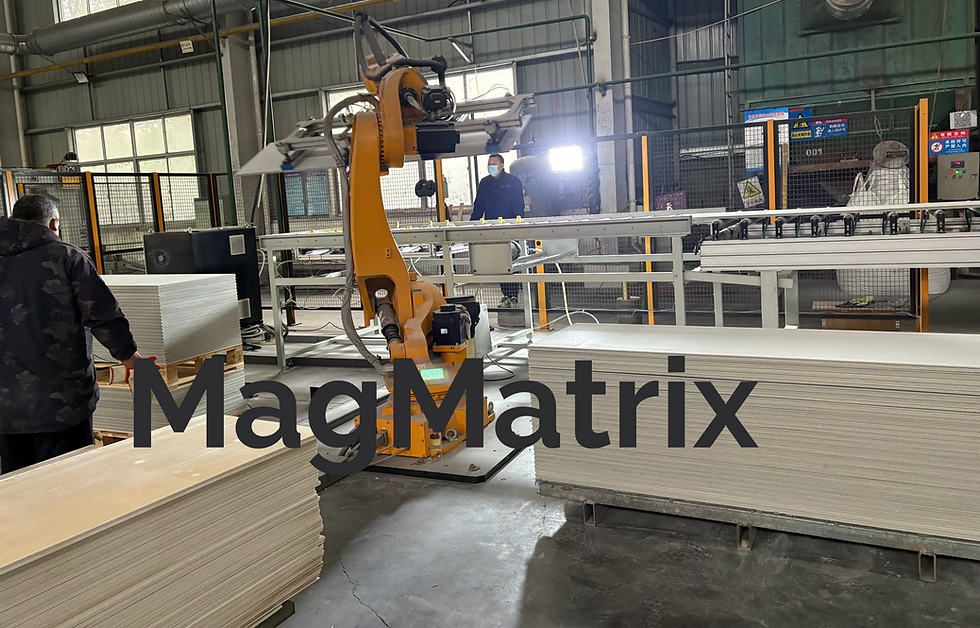
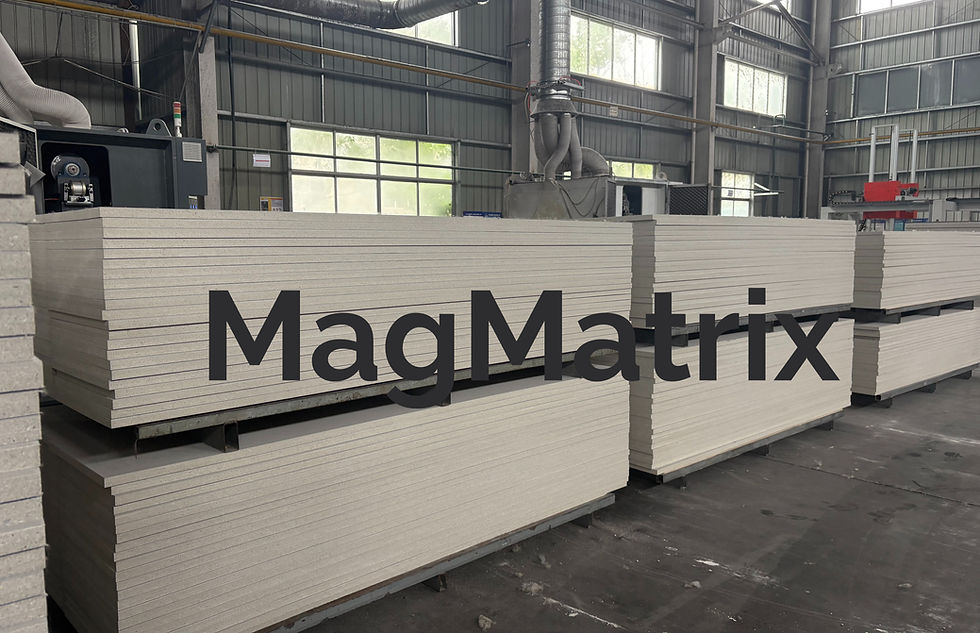
An assembly is only as good as the chemical consistency of its components. Passing an official ASTM E119 test at an accredited laboratory requires absolute material predictability. As the chloride free MGO board manufacturer, Jinpeng Group -- MagMatrix Brand here will help you for the LGS sheathing for wall, subfloor and roofing systems, especially on the light gauge steel subfloor panels systems.
True structural grade BMSC 517 floorboards cannot be produced via manual pouring or unpredictable small-batch workshops. They require a fully continuous, automated extrusion production line.
Advanced factories dynamically monitor the Loss on Ignition (LOI) of raw materials—adjusting formulations to hit strict target specs (typically 2%–4% in summer and 5%–7% in winter). This level of phase-control ensures that the exothermic hydration peak is perfectly regulated during curing, preventing micro-fractures inside the board matrix that could otherwise split open under the intense thermal expansion of an active fire test.
Conclusion: Leaner, Smarter Modular Engineering
Passing the ASTM E119 2-hour fire assembly for modular floorings does not require over-engineering with heavy, labor-intensive concrete toppings. By building a smart system anchored by a high-density, non-corrosive 19mm BMSC 517 structural floorboard, off-site manufacturers can deliver a lightweight, code-compliant, and climate-resilient flooring system that stands up to both daily structural loads and extreme fire threats.
Comments