
ZIP System Sheathing vs MGO Board: Which Performs Better in Extreme Weather?

Building integrity faces serious threats from extreme weather, and builders now focus on two distinct protective approaches: ZIP system sheathing and MGO board. Builders seeking the best performance in tough conditions show growing interest in both systems.
ZIP system sheathing combines structural panels with built-in water and air barriers. This creates optimized wall sheathing installations. MGO board sheathing stands out with its remarkable fire resistance. Tests show it can withstand temperatures up to 750°C (1,382°F) for over 30 minutes without any color change. Quality magnesium oxide boards prove their worth by resisting fire for one to four hours during standardized ASTM E119 tests. The right sheathing choice also helps cut down energy use throughout a building's life. Looking at the environmental impact, some MGO products like TechBoard® leave just a third of the carbon footprint that traditional Portland cement materials do.
Let's get into how these materials hold up at the time weather conditions redefine the limits of building envelopes.

Material Composition and Manufacturing Differences
Let's look at how ZIP System sheathing and MGO board differ in their material makeup and manufacturing. These differences play a key role in how they handle extreme weather.
ZIP System: OSB Core with Integrated Barrier
ZIP System sheathing has a high-quality, water-resistant oriented strand board (OSB) core that meets Structural 1 rating for better shear strength. The manufacturing process sets it apart from regular OSB. It has a phenolic resin-impregnated protective overlay that's factory-bonded to the panel. This built-in water-resistant barrier makes weatherization easier because you don't need separate housewrap.
The protective overlay becomes one with the engineered wood panel during production. The system doesn't need chemical or pressure treating processes that you'd find in traditional sheathing materials. This creates panels that stay strong and handle moisture well—they keep water out but let water vapor escape, which helps with drying.
ZIP System panels are quick to install. You only need the panels and their special seam tape to create a solid air and water barrier. This simple two-step process helps builders work faster and often costs less than traditional methods that need multiple steps.
MGO Board: Magnesium Cement with Fiberglass Mesh
MGO boards take a different approach. These cement panels use inorganic materials with glass fiber mesh for strength. Their core has magnesium oxide (MgO) for fire resistance and structural strength, mixed with magnesium sulfate to bind everything together.
The process starts by heating magnesium-rich ores between 700°C and 1,100°C to create reactive MgO for cement hydration. Manufacturers mix this MgO with magnesium salt solutions and add materials like perlite, wood fiber, and vermiculite. They put layers of fiberglass mesh throughout the panel to make it stronger. This boosts its resistance to impact and makes it better at holding fasteners.
Today's MGO board production needs exact measurements of raw materials. The process involves mixing everything into an even cement slurry, adding non-woven fabric and fiberglass mesh in layers, and letting it cure in controlled conditions. Some companies make chloride-free sulfate-based MgO boards that resist moisture better and can bend with strength above 16 MPa.
Sourcing and Availability of ZIP vs MGO Panels
ZIP System panels come from responsibly managed forests. Companies make them in North America, where organizations like PFS TECO test and check quality.
Most MGO boards come from China because that's where most high-quality magnesite minerals are. Even Huber's Exacor MgO panels are made in China under strict quality standards. The U.S. doesn't have enough raw materials to make these boards locally.
This can affect how quickly builders in North America can get their materials.
Both materials help the environment in their own way. ZIP System uses wood from renewable forests. MGO board uses magnesium, which is Earth's eighth most common element (2.1%). There's plenty of it in seawater—1,350 parts per million.
Moisture Resistance and Weather Durability
Knowing how to resist moisture and extreme weather is a vital test for any building material. ZIP system sheathing and MGO board tackle this challenge differently, each showing unique performance traits in tough conditions.
180-Day Exposure Rating of ZIP System Sheathing
ZIP System panels have a big advantage with their 180-day Exposure Rating and Guarantee. Builders can rest assured that these materials will last almost six months in direct weather exposure during construction delays without breaking down. The water-resistant barrier keeps working through this time, so you won't need traditional felt or housewrap.
Test data shows the ZIP System panel's permeability ranges from 1-3 perms, depending on thickness. The protective overlay alone reaches 12-16 perms. Manufacturers say this dual-permeability design creates "a delicate balance of water protection and drying potential". The system keeps bulk water out but lets water vapor escape, which stops moisture from getting trapped.
Projects that face long construction delays beyond 180 days need properly installed housewrap as extra protection to keep the system working properly.
MGO Board Sheathing in High-Humidity Environments
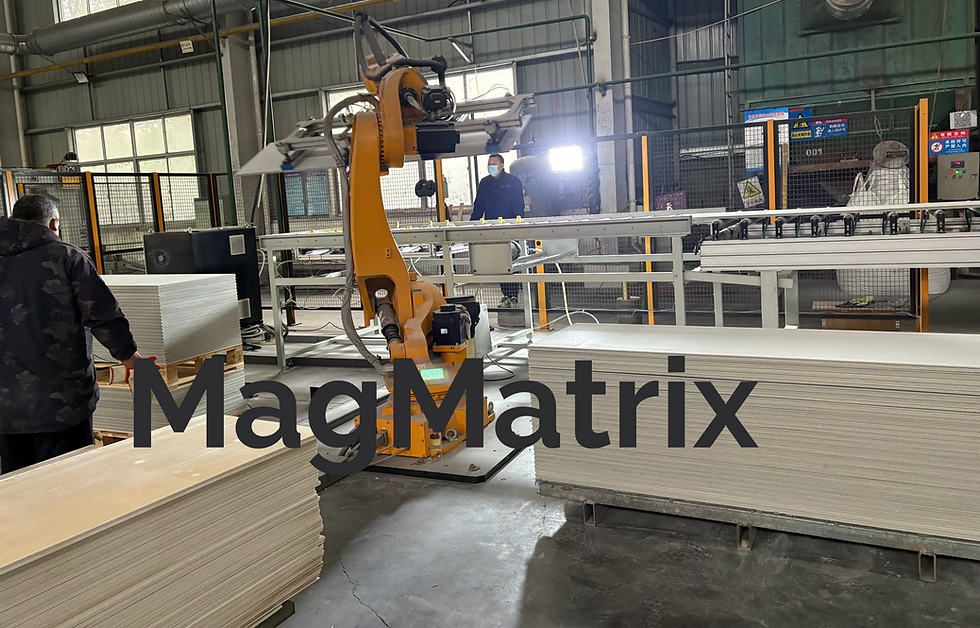
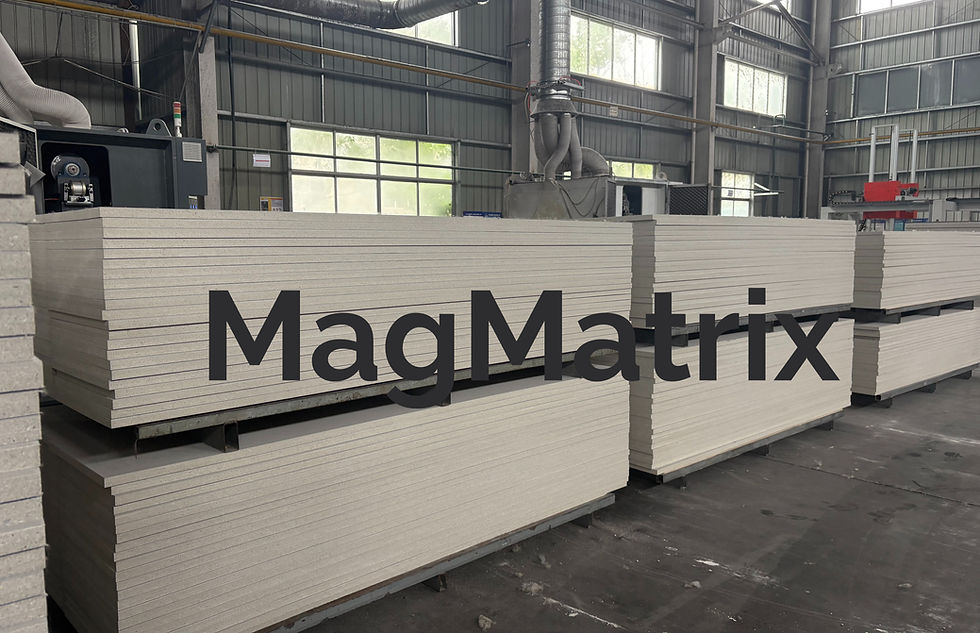
Also, the top brand like MagMatrix's BMSC 517 new sulfate MGO boards really shine in high-humidity settings where other materials often fail. Quality MGO panels take in just 0.34% moisture while gypsum board absorbs 3%. These boards absorb between 4-11% moisture in 75% relative humidity environments, which is much better than standard plywood.
The chemical makeup of MGO boards plays a key role in how they handle moisture. Magnesium sulfate-based (MOS) boards absorb 37% less moisture than magnesium chloride-based (MOC) products at 95% relative humidity. This difference matters because magnesium chloride naturally attracts moisture, which can lead to the "crying" or "weeping" effect where water droplets with chloride ions form on surfaces.
Jinpeng Group with MagMatrix brand BMSC 517 New sulfate-based MGO formulas fix this issue, making them perfect for coastal regions and flood-prone areas that face constant moisture exposure.
Swelling and Warping Behavior After Rain
Each material reacts differently to direct water exposure. Traditional OSB slowly takes in moisture but dries much slower, often leading to permanent edge swelling that won't go back to its original size. ZIP System panels keep their shape better than standard OSB and resist the warping and buckling that usually affects traditional materials.
MGO boards show remarkable stability when wet. Quality MGO panels stay structurally stable while wood-based products expand, contract, and break down with moisture cycles. Tests show that after 25 wetting-drying cycles, MGO panels stay strong while OSB loses 40% strength, plywood drops 9%, and gypsum falls 36-52%.
Drying Time and Vapor Permeability Comparison
Vapor permeability directly affects how well these materials dry out. ZIP System's protective layer has a 12-16 perm rating that helps moisture escape. Though lower than some housewraps (Tyvek's 54 perms), it dries well enough while staying strong.
MGO boards need the right formula to handle vapor properly. Magnesium sulfate-based boards manage moisture without the "weeping" issues found in chloride-based options. Their inorganic makeup gives mold or mildew nothing to feed on, scoring perfectly (0/0/0) on the ASTM G21 fungal resistance test.
Building science experts say wall assemblies need to dry properly rather than completely block vapor diffusion. Both materials can achieve this balance when installed correctly in well-designed wall assemblies. They keep bulk water out while allowing enough vapor movement to prevent moisture buildup.
Fire Resistance and Safety Ratings
Fire safety plays a vital role when choosing exterior sheathing materials. This becomes even more crucial in wildfire-prone areas. Buildings that need specific code compliance must pay special attention to fire safety features. ZIP system sheathing and MGO board each take different approaches to fire protection and show varying performance levels.
ASTM E119 and E84 Ratings for MGO Board
MGO boards stand out with their remarkable fire resistance. These panels have earned their place as leaders in this category. They qualify as non-combustible Class A fire-resistant materials that withstand temperatures up to 800°C (1,472°F) without burning. Some MGO products' durability lets them resist fire for up to 4 hours.
Rigorous testing standards verify MGO boards' fire performance. Quality magnesium oxide boards achieve 1-hour and 2-hour fire ratings in suitable wall assemblies without extra materials. This testing follows ASTM E119 (also known as UL 263), which measures how long materials keep their structural integrity during controlled high-temperature fires.
MGO boards typically score perfectly in ASTM E84 testing (the "Steiner Tunnel Test") with zero flame spread and minimal smoke development. This outstanding performance puts them in the highest Class A classification. Many MGO products meet ASTM E136 standards as truly non-combustible materials under IBC 2021 requirements.
ZIP System Wall Sheathing in Fire-Rated Assemblies
ZIP System sheathing's OSB core provides moderate fire resistance compared to mineral-based options. The system works well in fire-rated assemblies through specific methods.
ZIP System R-Sheathing appears in UL Design No. V302 and V303 for fire-rated applications. Builders can't just swap it for conventional wood structural panels in fire-rated wall assemblies that specifically call for "wood structural panels". Technical documentation outlines two approaches: the substitution method or the addition method.
The foam insulation layer in ZIP System R-sheathing meets code requirements. ASTM E84 standards show its flame spread index stays under 75 and smoke development index below 450.
Smoke and Toxic Gas Emissions During Fire Events
Smoke production and toxic emissions are crucial safety factors beyond fire resistance. MGO boards shine here by producing almost no smoke during fires and releasing virtually no toxic fumes or gasses. This feature helps improve visibility and air quality when people need to evacuate, which reduces one of fire-related deaths' main causes.
MGO boards release only water vapor under high temperatures, unlike resin-based materials. This vapor helps slow flame spread and cuts down smoke density.
Magnesium oxide absorbs heat and creates a protective char layer. This layer shields underlying structures and gives people more time to evacuate.
Both materials work in fire-rated assemblies, but MGO board sheathing delivers better results when fire safety is the top priority.
Structural Strength and Fastener Performance
Structural performance in extreme conditions requires exceptional strength and reliable fasteners from building materials. ZIP system sheathing and MGO boards each provide unique advantages when used in load-bearing applications and challenging environments.
Flexural Strength: 15–22 MPa in MGO vs OSB
MGO boards excel at flexural strength with capabilities ranging from 15 to 22 MPa. Their superior bending resistance lets the panels flex under structural stress without breaking. MGO panels retain almost 100% of their flexural strength after 25 wetting-drying cycles, while plywood loses about 9% under similar conditions. The half-inch MGO sheathing handles shear stress above 280 psf, making it an ideal choice for areas with extreme weather changes.
Fastener Holding Power in ZIP System Sheathing
A building's structural integrity depends heavily on fastener performance over time. Half-inch MGO sheathing holds single fasteners with strength above 155 lbs - this is a big deal as it means that it surpasses the industry standard requirement of 32 lbs.
Standard ZIP system installations work well with 8d nails (2.5 inches), but high-wind regions need 10d nails for extra security. ZIP System R-Sheathing used in wall bracing or shear walls requires nails with at least 0.131-inch diameter that penetrate studs by 1.5 inches or more.
Impact Resistance in Seismic and Wind Zones
ZIP System panels come with Structural 1 ratings for 7/16", 1/2", and 5/8" thicknesses, delivering the shear strength needed for seismic and high-wind zone requirements.
These engineered panels perform reliably during extreme lateral forces. MGO sheathing matches this performance by withstanding impact forces above 5 KJ/m² with minimal damage. MGO delivers structural values comparable to OSB and plywood, making it a solid choice for structural sheathing in exterior wall loads. This feature proves valuable particularly in hurricane, tornado, or earthquake-prone regions.
Installation, Cost, and Long-Term ROI
Building material decisions depend on more than just performance. The optimized processes and warranty protections of both systems show key operational differences.
ZIP System's One-Step Installation Process
The ZIP System makes traditional multi-step weatherization easier through its integrated approach. Builders put up panels first and tape the seams to create a continuous barrier. This two-step process removes the need for separate housewrap application and saves time. The process starts when builders line up panels using chalk lines. They fasten them with appropriate nails at marked spots on the panels. Each fastener should sit flush with the panel surface to keep the barrier intact. The final step involves applying ZIP System tape and rolling it properly for maximum adhesion.
Labor and Equipment Needs for MGO Board Sheathing
MGO installation works with standard carpentry tools plus special cutting equipment. The process matches conventional sheathing installation, but MGO boards just need corrosion-resistant fasteners every 8 inches along edges. Cutting these boards requires a carbide-tipped blade or circular saw with fiber-cement blades because of their density. MGO panels weigh more, so multiple workers must help position them. This adds to labor costs.
Material Cost Comparison: ZIP vs MGO
The price gap between these systems remains wide:
· ZIP System panels: USD 2.25–3.50 per square foot
· MGO boards: USD 1.50–3.00 per square foot
A typical house needs 70 sheets. The difference between standard plywood (USD 1,114) and ZIP System (USD 1,353) comes to USD 239. MGO costs more upfront than traditional materials, but its value shows through reduced maintenance needs.
Warranty and Maintenance Considerations
Huber's ZIP System products come with a 30-year limited warranty and 180-day exposure guarantee. This beats Tyvek's 10-year coverage. Quality MGO sheathing needs little maintenance since it resists water damage, mold, mildew, and pests. MGO lasts 20-30 years while gypsum products last 10-15 years. This longer lifespan makes the higher
initial cost worth it.
Conclusion
A look at ZIP System sheathing and MGO board shows they each shine in different ways based on project needs and environmental conditions.
ZIP System sheathing's biggest advantage is its quick installation and impressive 180-day exposure rating. You won't need separate housewrap with this integrated solution, which cuts down labor costs. The system manages moisture well by striking the right balance between water resistance and vapor permeability. This creates the best possible drying conditions inside wall assemblies.
MGO boards really stand out in tough conditions. These boards can handle temperatures up to 800°C without burning, making them perfect for areas prone to wildfires. Quality MGO panels stay strong through repeated wet-dry cycles, so they work great in humid places or areas that face severe weather often.
Cost plays a big role in choosing between the two. ZIP System costs more upfront than regular OSB with housewrap, but you'll save on labor and get a 30-year warranty. MGO boards are pricey too, but they're worth it because they need little maintenance and last longer.
Your project's priorities will help you pick between these materials. ZIP System is your best bet when you need quick installation and good moisture control. MGO board works better when fire safety, weather resistance, or long-term durability top your list.
Both options are big improvements over traditional sheathing. Builders in extreme weather zones should look at these alternatives based on their local threats - whether it's hurricanes, wildfires, floods, or freezing conditions. Picking the right material can improve your building's strength and might save you money on maintenance over time.
Comments