
5 Exterior Wall Sheathing Options That Save You Money in 2026

Your budget takes a hit from exterior wall sheathing choices. OSB costs about half of what you'd pay for plywood, yet delivers similar structural performance. The price gap becomes obvious during home construction or renovation - a standard 4×8 OSB sheet runs $13.49-$16.74, while you'll pay $18.49-$23.34 for comparable plywood.
Our research reveals the most affordable wall sheathing materials on today's market. Plywood's 15-19% lighter weight makes it easier to handle at job sites. Each exterior sheathing option comes with its own set of tradeoffs. OSB tends to expand more than plywood when exposed to moisture. Traditional materials still work great, and state-of-the-art options like foam board insulation deliver impressive R-values from 5 to 7 per inch. The best exterior wall sheathing choice depends on your project's requirements and your budget.
This piece will cover five exterior wall sheathing options that offer the best value in 2026. You'll learn to balance upfront costs against how these materials perform over time.
Plywood Exterior Wall Sheathing Options
Plywood stands as a reliable foundation for exterior wall sheathing in residential and commercial projects in 2026. Multiple layers of thin veneer wood, glued together, create a versatile material that forms a strong barrier between your home's frame and external elements. Let's look at why builders and homeowners still choose plywood.
Plywood Material Overview
Thin layers of wood veneer bonded with durable adhesives form plywood exterior wall sheathing panels that deliver excellent structural integrity. The cross-laminated structure gives plywood remarkable stability, helping it resist warping and twisting as temperatures and moisture levels change.
Standard thicknesses for exterior wall applications range from 3/8" to 3/4", though 7/16" and 1/2" are most common in residential construction. Most applications work well with a 7/16" thickness for studs spaced 16" on center. High-wind areas or studs spaced 24" on center need 1/2" thickness.
CDX plywood serves as the industry standard for exterior wall sheathing and strikes a balance between budget-friendly options and performance. The "C" and "D" refer to veneer grades, while "X" shows exposure-rated adhesives that handle temporary moisture exposure. Higher-grade materials, such as exterior-rated plywood, offer greater durability and weather resistance for demanding applications.
Energy Efficiency of Plywood Sheathing
Plywood adds to a home's overall energy efficiency, though it's not primarily an insulating material. The R-values range from 0.31 for 1/4" thickness to 1.25 for 1" thickness.
A solid layer of plywood sheathing reduces air infiltration when installed and sealed properly. Building codes recognize walls fully sheathed with plywood or OSB as air barrier materials. This air-sealing feature helps create energy-efficient building envelopes.
Many builders pair plywood sheathing with continuous exterior insulation to boost energy performance. The 2021 International Energy Conservation Code now requires R-20 cavity insulation plus R-5 exterior insulation (R-20+5) or similar setups in certain climate zones. This combination delivers structural benefits and improved thermal performance.
Installation Tips for Plywood Panels
The right installation maximizes plywood's performance as exterior wall sheathing. Here are the key practices you should follow:
1. Orientation and Layout
· Place panels with the long dimension perpendicular to studs for maximum strength
· Use vertical orientation at corners if local code requires improved shear strength
· Stagger panels in subsequent rows by half a sheet to avoid continuous seams
2. Spacing and Fastening
· Keep a 1/8" gap between panels for expansion
· Use 8d common nails or ring shank nails (2½-inch) for standard applications
· Place nails 6" apart on panel edges and 12" on intermediate supports
· Hurricane-prone regions need nailing at 4" on center along edges and 6" in field
Proper alignment matters greatly. The sheathing should lap the sill plate with nails 4" on center along edges. A water-resistive barrier (WRB) or house wrap should be applied over the plywood sheathing for extra protection. This membrane needs a 6-inch overlap at seams and firm stapling.
Plywood Cost Comparison in 2026
Plywood sheathing remains competitively priced compared to other exterior wall sheathing options in 2026. Standard plywood sheets cost between USD 16.00 and USD 24.00 per 4×8 sheet. Average-sized homes require USD 2,800.00 to USD 4,200.00 in materials.
These factors affect the final cost:
· Grade and quality - Better grades with fewer defects cost more
· Thickness - Thicker panels offer more strength at higher prices
· Treatment options - Water-resistant or fire-retardant treatments increase costs
· Regional availability - Location affects pricing through transportation costs
Smart builders look at both upfront costs and long-term value when choosing materials. Plywood costs more than OSB (oriented strand board), but its superior moisture resistance and stability make it worth considering. Less swelling occurs in plywood compared to OSB when moisture hits, which could mean fewer repairs later.
Plywood's durability makes it a smart choice for exterior wall sheathing, particularly in harsh weather regions. Its ability to maintain strength even with some moisture exposure helps buildings last longer, offsetting the higher initial investment compared to other options.
Foam Insulating Sheathing
Rigid foam insulating sheathing is a premium solution that helps homeowners save energy and protect their exterior walls. This material outperforms traditional structural sheathing by creating a continuous thermal barrier that significantly reduces heat transfer through building walls.
Foam Board Material Overview
There are three main types of rigid foam board insulation, each with unique properties for different uses. These include expanded polystyrene (EPS), extruded polystyrene (XPS), and polyisocyanurate (polyiso).
Expanded polystyrene (EPS) has natural voids between beads that heat and expand, allowing them to fuse together. This open-cell structure gives better thermal resistance but makes EPS more vulnerable to water damage than other foam types. Rigid foam's R-values range from 3.6 to 8.0 per inch - this is a big deal, as it means that traditional materials like plywood have an R-value of just 1.25.
Extruded polystyrene (XPS) is similar to EPS but uses a different manufacturing process that creates a closed-cell structure. XPS boards are stronger and more water-resistant than EPS. You'll notice that XPS boards have a smooth surface that differs from EPS's textured appearance.
Polyisocyanurate (polyiso) leads the pack among rigid foam insulation types. This thermoset material, made from cross-linked polymers, chars rather than melting when heated, which improves fire resistance. Polyiso also delivers the highest R-value per inch, ranging from R-5.7 to R-6.5, making it the most efficient thermal insulator.
Foam Board Energy Savings Potential
Foam board insulation saves energy by creating an unbroken insulating layer across your walls. This tackles thermal bridging: heat escapes through building parts with low R-values, like wood (R-1 per inch) or steel (R-0.04 per inch).
Standard construction leaves about 25% of wall area without proper insulation at windows, doors, studs, and plates. Rigid foam on the exterior side of framing blocks these heat losses. To name just one example, see how adding just one inch of insulating sheathing (R-5) to a 2×6 stud wall boosts thermal resistance from R-14.4 to R-19.4—you get 35% better insulation with only 15% more wall thickness.
Rigid foam does more than just insulate. When installed correctly with sealed joints, it works as:
3. A water-resistive barrier (WRB) against rain
4. An air barrier that stops unwanted air movement
5. A vapor control layer that manages moisture
These multiple benefits make foam insulation great for building energy-efficient, lasting enclosures that control indoor conditions without breaking the bank.
Foam Board Installation Tips
You need proper installation to get the most from rigid foam insulating sheathing. Here's what works best:
Preparation and Material Selection:
· Keep foam boards on clean, flat surfaces away from anything flammable
· Keep foam away from reflective surfaces that might focus sunlight on boards
· Pick the right density: Type II EPS, Type X XPS, Type 1 polyisocyanurate, or Type IVB mineral fiber board
Installation Techniques:
· Put boards up horizontally or vertically - longer boards mean fewer joints
· Offset insulation board joints from structural sheathing joints
· Leave 1/8" between panels for expansion, just like plywood
Fastening Methods:
· Your fasteners should go into framing by at least 1½ inches for wood or three threads for steel
· Keep fasteners no more than 18" apart at edges and 24" in middle areas
· Use cap nails, cap staples, or assembled fasteners with 1" minimum head size
· For foam over exterior sheathing, fasteners need to be 1" longer than total foam thickness
Sealing for Air and Water Resistance:
· Tape all seams with manufacturer-approved tape on clean, dry surfaces
· Put tape over joints to cover fasteners, press down the whole length
· Work bottom to top when putting on multiple tape pieces
· Seal around holes with low-expansion foam or sealant
Foam Board Cost Efficiency
Foam insulating sheathing costs more upfront than regular sheathing, but energy savings make it worth the investment. Current prices vary:
Polyisocyanurate (RMAX) boards run USD 1.20 to USD 2.50 per square foot, with R-values around 6.0 to 6.5 per inch. Extruded polystyrene (FOAMULAR by Owens Corning) costs USD 1.00 to USD 2.00 per square foot with an R-value of 5.0 per inch.
A typical DIY installation with 2" of foam insulation needs about USD 3,500 in materials. This investment pays off through lower heating and cooling bills over time.
Several things affect your cost-benefit math:
· Climate Zone Requirements - Colder areas need thicker insulation, but save more
· Energy Prices - Higher utility rates mean faster payback
· Building Configuration - Wall-to-floor ratio changes total costs
· Integration with Other Systems - Using foam for multiple purposes cuts project costs
Foam insulating sheathing helps the environment by cutting greenhouse gas emissions from heating and cooling. Manufacturers keep improving their products to reduce carbon impact while making them work better.
Smart homeowners combine foam insulating sheathing with other energy-saving building practices. This creates a complete approach that balances upfront costs with long-term benefits.
MGO Board Exterior Sheathing
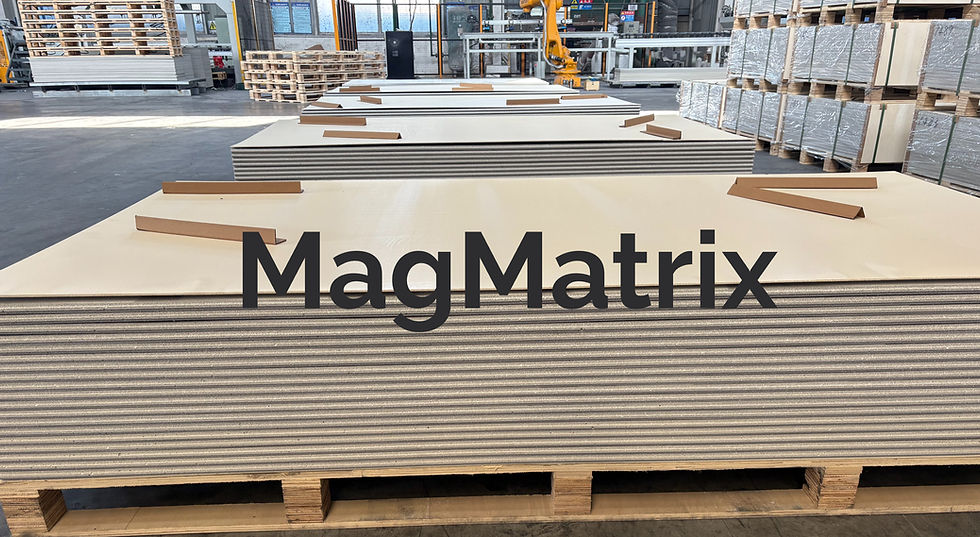
MGO boards are an innovative alternative for exterior wall sheathing. They combine exceptional durability with multiple performance benefits. These innovative panels solve many problems that traditional sheathing materials don't handle well, thanks to their unique mineral-based composition.
What is the MGO Board?
MGO boards are made using magnesium oxide from natural magnesite (MgCO3) through calcination. The material combines with a brine of magnesium salt solution containing chloride, sulfate, or phosphate to create Sorel cement. This fire-resistive material's applications go back to the Great Wall of China. The manufacturing process involves casting magnesia cement and inert fillers onto a mold. The boards then cure under controlled conditions.
The composition typically has:
· 56-58% magnesium oxide powder for compressive strength
· 27-29% binding agents that create strong cementitious matrices
· Reinforcement materials such as fiberglass mesh layers
· Fillers like perlite for insulation and weight reduction
This mineral-based construction produces panels with densities ranging from 650 to 1400 kg/m³. The panels feature a smooth front surface and a textured back where you might see the fiberglass mesh pattern.
Fire and Moisture Resistance of MGO
MGO sheathing shows remarkable fire resistance, beating traditional materials like oriented strand board (OSB) and even fire-retardant-treated wood. Top-quality MGO boards achieve:
· ASTM E119 ratings for 1- and 2-hour fire-rated wall assemblies
· NFPA 285 compliance for use with combustible cladding
· Zero flame spread and zero smoke developed index in ASTM E84 testing
These panels stay stable at temperatures up to 1,382°F (750°C) for more than 30 minutes without structural damage. Their melting points reach 2,800°C.
MGO sheathing's moisture resistance is just as impressive. In fact, third-party studies confirm that "MgO sheathing is dimensionally stable when exposed to moisture. This durability is its primary attribute and the foundation for performance under higher moisture loads". Standard two-hour immersion tests show MGO boards absorb just 0.34% water by weight, while OSB sheathing absorbs over 10%.
MGO boards keep almost 100% of their flexural strength after 25 wet-dry cycles. OSB wall sheathing loses about 40% of its structural integrity under similar conditions. This resistance to moisture damage makes MGO a great choice for humid climates or areas with frequent water exposure.
Installation Considerations for MGO Panels
MGO board exterior sheathing installation follows many standard practices, with some key points to remember:
You need proper storage first—keep boards in a cool, dry place, even though they resist moisture. Check that framing is level and free from moisture issues before installation.
For fastening:
· Use corrosion-resistant screws or nails, as some types might react with the board
· Make sure fasteners go into framing by at least 1½ inches for wood or three threads for steel
· Keep fasteners no more than 18" apart around edges and 24" in field areas
Use carbide-tipped blades to cut MGO boards for clean edges. MGO doesn't contain carcinogenic materials, but you should still wear a dust mask and safety glasses when cutting. A water-resistant barrier works best with MGO sheathing for the best long-term performance.
The boards' stiffness allows you to use thinner MGO sheets than with similar exterior sheathing products. The boards can bend or warp to follow gentle curves, offering more flexibility than Portland cement boards while remaining sturdier than gypsum boards.
Cost Benefits of MGO in Long-Term Use
MGO board exterior sheathing costs more upfront than traditional options. In 2026, MGO board sheathing runs between USD 1.50 and USD 3.50 per square foot. This is a big deal, as it means OSB sheathing costs between USD 0.50 and USD 1.00 per square foot.
The long-term value makes this premium worth it for many uses. MGO sheathing offers several advantages that help with lifecycle cost efficiency:
· Strong structural properties let you attach most cladding types directly without extra rails, girts, or sub-girts
· The exceptional compressive strength of 12-25 MPa beats OSB's typical 10.3-17.2 MPa range
· Installation goes faster using a "tile" approach to joint finishing, so you can paint the same day or next-day
· You'll spend less on maintenance thanks to better moisture, mold, and pest resistance
MGO sheathing also brings environmental benefits that could add more value. The raw materials are abundant—magnesium is Earth's eighth-most-abundant element. Making MGO requires lower temperatures (700-1000°C) than Portland cement (1400-2000°C), resulting in lower energy use and less air pollution.
Builders looking for both performance and sustainability will find MGO boards compelling. They balance the upfront cost against long-term structural integrity, lower maintenance costs, and longer building life.
Thermo-Brace Structural Panels
Builders looking for lightweight yet durable exterior wall sheathing will find Thermo-Brace structural panels a perfect fit. These panels boost performance while using less material. The product combines structural strength, moisture resistance, and weather protection into a single, easy-to-handle solution that saves time and money.
Thermo-Brace Material Overview
Thermo-Brace's structural sheathing uses pressure-laminated plies made from high-strength cellulosic fibers. These fibers receive special treatment for water resistance and are bonded with a proprietary water-resistant adhesive. The panels feature a protective polymer layer on both sides, which makes them more moisture-resistant than traditional OSB.
Standard Thermo-Brace panels come in these specifications:
· Thickness: 0.095" (2.4 mm) for red grade
· Weight: Approximately 0.348 lbs per square foot
· Standard dimensions: 48" and 48¾" widths with lengths of 96", 108", and 120"
The panels can be custom-made up to 12 feet long to make installation more efficient. Their lightweight design helps workers handle and install them with less strain, without sacrificing performance. Builders can add reflective foil facings to one or both sides of the panel to boost energy efficiency.
Thermo-Brace as a WRB and Air Barrier
Thermo-Brace works as several components in a wall assembly. Testing shows that all grades function as a water-resistive barrier (WRB) under IRC Section R703.2 and IBC Section 1404.2. This multi-purpose design removes the need for a separate house wrap, which cuts down on time and material costs.
The product also serves as an air barrier material under IRC Section N1102.4.1.1 and IECC Sections. The panels create a tight seal against framing members when installed correctly, which blocks both air and water.
Builders can integrate Thermo-Brace into a complete building envelope system. Using it with Barricade Extreme flashing tape creates a complete weather barrier that replaces traditional OSB and building wrap combinations.
Installation Tips for Thermo-Brace
The right installation makes a big difference in Thermo-Brace's performance. The panels work best when you avoid fastening the four corners first, as this can lead to gaps or rippling. Here's what to do instead:
6. Begin at the panel's top left and fasten from top to bottom, following the printed fastener schedule (every 3")
7. Work horizontally across the panel, securing fasteners at the top and bottom until you reach the next stud
8. Follow the numerical order and repeat until the panel sits securely
You can treat seams in two ways: overlap panels by ¾" with fasteners, or create butt joints with a ⅛" gap and seal them with appropriate seam tape. The code requires proper flashing for all sheathing penetrations.
Thermo-Brace GUARD offers an innovative design that wraps around corners. This creates a complete enclosure that joins two separate walls into one continuous unit. You won't need corner flashing, and it stops air leaks and moisture at these weak points.
Thermo-Brace Cost and Performance
Thermo-Brace gives you great value for money. The 2026 price stays below OSB or ZIP System sheathing while meeting all code requirements. The price remains stable, unlike other sheathing materials that often see big swings.
These panels match or exceed OSB's structural capabilities. They provide excellent racking resistance, and their high shear value beats OSB testing standards recognized by the International Residential Code.
The material retains its shape well and swells only slightly when wet. Its lightweight design reduces labor costs, as one person can handle and install the panels safely.
The product comes with a 30-year limited system warranty, giving builders and homeowners long-term security. This protection, plus its many uses, makes Thermo-Brace a top choice for builders who want both cost savings and high performance.
Exterior Gypsum Sheathing
Gypsum sheathing provides affordable fire protection for exterior walls. Builders can use it as a versatile base for a wide range of cladding systems. Modern construction still relies on this traditional material as builders look for ways to balance safety and cost.
Exterior Gypsum Material Overview
A water-resistant gypsum core wrapped in water-repellent paper or fiberglass mat facers makes up exterior gypsum sheathing. Paper-faced variants have a wax-treated core with water-repellent paper covering both sides and long edges. This creates an effective moisture barrier. Glass mat-faced gypsum sheathing takes weather protection a step further by using fiberglass mats around the specially treated core.
Manufacturers produce exterior gypsum panels in 1/2" and 5/8" thicknesses. These come in standard 4' widths and lengths from 8' to 16'. The 5/8" panels feature Type X cores engineered specifically for fire-rated assemblies. Builders can use this versatile material under wood, metal, vinyl siding, masonry veneer, and stucco.
Fire Resistance and Insulation Value
Gypsum's standout feature is its fire resistance. The noncombustible core contains chemically bound water that slowly releases at high temperatures. This process provides thermal protection until completion. The 5/8" Type X panels work great in multi-family construction due to their impressive fire ratings in tested assemblies.
The material provides modest insulation with an R-value of about 0.5 per inch. While not a primary insulator, it helps improve the energy efficiency of wall assemblies. The sheathing has an average vapor permeance of 20 perms (dry cup method). This allows water vapor movement in both directions. Walls can release internal moisture before problems start thanks to this permeability.
Installation Tips for Gypsum Panels
Successful installation starts with proper storage. Keep panels dry and protected from weather damage. Here's how to attach panels to framing:
9. Install 4' wide sheathing vertically with edges meeting over framing members
10. Place fasteners no more than 4" on center along ends/edges and 8" on center in field areas
11. Use the right fasteners: galvanized nails (minimum 12 gauge with 7/16" diameter head) or corrosion-resistant screws
Framing spacing should not exceed 24" on center. Stagger all joints between panels. A water-resistive barrier must cover the sheathing if exposure will last beyond one month. Proper flashing of rough openings with weeps or caulking prevents water from entering stud cavities.
Cost Comparison with Other Sheathing Types
Exterior gypsum sheathing costs less than most alternatives discussed earlier. Regional prices vary, but gypsum typically costs less than plywood, MGO board, and foam insulation. It runs slightly higher than Thermo-Brace panels.
The material's benefits go beyond its purchase price. Its lightweight cuts labor costs and structural requirements. The sheathing works well with many cladding systems, which makes procurement and installation easier.
Gypsum sheathing does have its limits. Unlike MGO boards, it can't handle long-term moisture exposure. It also lacks plywood's structural strength in high wind or seismic areas. Yet its excellent fire resistance, good moisture protection, and versatile applications make up for these drawbacks. This makes it a smart choice for builders who want reliable exterior wall protection without breaking the bank.
Comparison Table
Sheathing Type | Material Composition | Fire Resistance | Moisture Resistance | R-Value/Insulation | Cost Range (2026) | Notable Features |
Plywood | Multiple wood veneer layers bonded with adhesives | No specific rating mentioned | Performs better than OSB with minimal swelling during moisture exposure | 0.31 (1/4") to 1.25 (1") | $16-24 per 4×8 sheet | Maintains strong dimensional stability and structural integrity |
Foam Insulating | EPS, XPS, or Polyisocyanurate | Polyiso chars instead of melting | Varies by type with XPS showing the best water resistance | 3.6-8.0 per inch | $1.20-2.50 per sq ft | Creates continuous thermal barrier that doubles as air/water barrier |
MGO Board | Magnesium oxide combined with binding agents and fiberglass mesh | Remains stable at temperatures up to 1,382°F | Exceptional resistance with just 0.34% water absorption | No rating provided | $1.50-3.50 per sq ft | Features high compressive strength and resists pests |
Thermo-Brace | Cellulosic fibers pressure-laminated with polymer coating | No specific rating mentioned | Resists moisture effectively thanks to protective polymer layer | No rating provided | Costs less than OSB/ZIP System | Offers lightweight design and acts as water-resistive barrier |
Exterior Gypsum | Water-resistant gypsum core wrapped in paper/fiberglass facing | Type X rated for excellent resistance | Moderate protection but needs immediate WRB coverage | 0.5 per inch | Cheaper than plywood/MGO | Provides economical solution compatible with various cladding systems |
Conclusion
Your choice of exterior wall sheathing can affect your construction budget and how well your home performs over time. This piece looks at five budget-friendly options that give you great value while meeting different structural and environmental needs in 2026.
Plywood is a reliable choice with excellent dimensional stability. Sheets cost between $16 and $24. While it costs more than options like OSB, plywood's better moisture resistance makes it worth the extra money, especially in humid areas.
Energy-efficiency fans will love foam-insulating sheathing. You'll pay more upfront ($1.20-$2.50 per square foot), but its impressive R-values of 3.6-8.0 per inch mean you could earn back the cost through lower energy bills.
Safety- and longevity-focused builders should consider MGO boards. These panels keep almost 100% of their strength even after long exposure to moisture. They work great in tough environments where regular materials might not last.
Thermo-Brace structural panels are maybe even the most balanced choice if you're watching your budget. They weigh less, so labor costs drop, and they handle moisture well. Plus, they cost less than traditional OSB sheathing.
Exterior gypsum sheathing rounds out the list as your most affordable fire-resistant choice. It plays well with different cladding systems and gives decent thermal performance at a much lower price than premium options.
Several things will shape your final sheathing choice. Climate, building codes, budget limits, and performance needs all play vital roles. The comparison table above helps match these factors with your project's specific needs.
Note that installation quality matters just as much as picking the right material. Even top-quality sheathing won't work right if it's not installed correctly. You need to follow the manufacturer's guidelines for spacing, fastening patterns, and moisture protection, regardless of the option you pick.
This piece should help you navigate the process of selecting exterior wall sheathing with confidence. Smart choices now lead to quick savings and lasting value for your project.
Comments