
Why Architects Choose Magnesium Oxide Boards: Hidden Benefits for Green Buildings

Magnesium oxide boards are changing sustainable architecture with their excellent fire resistance and zero VOC emissions.
Architects increasingly choose these innovative building materials. They want both high performance and minimal environmental effects. Jinpeng Group — MagMatrix Brand BMSC 517 new sulfate Magnesium boards are more versatile than traditional options.
These building materials provide better strength-to-weight ratios and resist moisture well. They work great in many applications. The boards create healthier indoor spaces by naturally inhibiting mold and mildew growth. Their mechanical properties, such as dimensional stability and durability, make them valuable for structural applications. The boards also improve energy efficiency in building envelopes and help cut operating costs.
This piece explores what makes these boards popular in green construction. You'll learn about their composition, types, performance features, and manufacturing details. We'll look at the challenges in market adoption and supply chain dynamics. By the end, you'll see why architects pick this green alternative for environmentally responsible buildings.

Material Composition of Magnesium Oxide Boards
Magnesium oxide boards achieve their exceptional performance through a carefully balanced mix of minerals and reinforcing materials. Let's look at what goes into these building panels and why they work better than traditional options.
Reactive MgO from magnesite and brucite sources
Reactive magnesium oxide powder is the foundation of these boards, accounting for 56-58% of the material. We obtain this vital component from magnesium-rich ores such as magnesite (MgCO₃) and brucite (magnesium hydroxide). The board's performance depends on MgO reactivity, which is determined by the calcination process.
Manufacturers heat magnesite between 700°C and 1000°C. This breaks it down into magnesium oxide and carbon dioxide. The MgO powder that results binds everything together and imparts strength and fire resistance to the boards. The purity of MgO affects its early-stage hydration in the manufacturing process.
Role of magnesium chloride and magnesium sulfate in bonding
These boards use one of two bonding agents: magnesium chloride (MgCl₂) or magnesium sulfate (MgSO₄). Each makes up 27-29% of the board. These salts combine with magnesium oxide to form various magnesia cements.
MgO and magnesium chloride form magnesium oxychloride cement (MOC), which was once the most common mix. However, this combination led to "weeping boards" and corroded metal fasteners due to residual MgCl₂.
Magnesium sulfate works better. When it reacts with MgO, it forms magnesium oxysulfate cement (MOS), which is more moisture-resistant. Boards made with MgSO₄ prevent moisture from reentering the board's halogen, improving performance in humid environments. This change eliminates the corrosion risk caused by chloride ions in older MgO boards.
Use of perlite, wood fiber, and glass mesh as fillers
The boards need more than just their main ingredients. Here's what else goes in:
· Perlite: This volcanic glass (3-4% of the mix) puffs up when heated. It improves the boards' insulating performance while keeping them light.
· Wood Fiber: Wood fibers or sawdust (5-6% of the board) do more than just fill space. They make the boards more flexible and easier to work with. They also improve sound insulation and prevent the boards from shrinking.
· Fiberglass Mesh: This material (4-6% of the mix) makes the boards stronger and more resistant to impacts. It prevents cracks from forming and helps the boards remain strong under physical stress and temperature changes.
The boards also contain a small amount of phosphate (PO₄), about 0.1-0.3%, which supports chemical bonding. Unlike Portland cement, magnesia cements perform well with wood-based materials and don't react adversely with natural compounds such as acids, sugars, resins, and waxes.
This carefully selected mix of ingredients produces boards that are strong, fire- and moisture-resistant. That's why they're becoming more popular in green building projects.
Types of Magnesia Cements Used in Green Construction
Magnesium oxide boards rely on magnesia cement systems as their foundation. Each formulation gives these boards unique performance benefits. The binding systems play a key role in determining the properties of finished boards.
Magnesium Oxychloride (MOC) vs Magnesium Oxysulfate (MOS)
Magnesium oxychloride cement (MOC) was discovered in 1867, making it among the first magnesia-based cements used in commercial applications. You create MOC by mixing MgO powder with magnesium chloride solution. MOC exhibits impressive mechanical properties, with compressive strength twice that of Portland cement. This cement type provides rapid solidification, early strength, and excellent abrasion resistance.
MOS (magnesium oxysulfate cement) marks a big step forward. While MOS starts with lower strength than MOC, it brings major advantages that make it a top choice for magnesium oxide boards in green construction:
· Better shelf life and easier transport due to its less hygroscopic nature
· Metal fasteners face much less risk of corrosion
· Holds up better against moisture damage
· Much higher decomposition temperature for better fire protection
The best part? MOS cement absorbs CO₂ from the environment through passive carbonization throughout its life. This produces magnesium carbonate and reduces carbon emissions by 73% compared with Portland cement. As a bonus, this process strengthens the cement.
Emerging use of Magnesium Phosphate Cements (MPC)
MPCs are the latest innovation in magnesia-based binding systems. Unlike MOC and MOS, which require reactive MgO, MPCs use dead-burnt magnesia (heated to 1600-2000°C) mixed with phosphate sources such as potassium dihydrogen phosphate (KH₂PO₄).
MPCs solidify through a unique acid-base reaction that creates crystalline K-struvite (MgKPO₄·6H₂O). This special chemistry brings several benefits:
· pH stays near neutral, unlike Portland cement's high alkalinity
· Needs less water since it's chemically bound in the crystal structure
· Sets in just 10-20 minutes at room temperature
· Reaches impressive strength (14 MPa) in only two hours
MPC-based magnesium boards are well-suited for quick repairs or cold-weather construction. The high cost of producing dead-burnt MgO makes widespread use difficult.
Phase stability and water resistance differences
The cement system's phase stability and water resistance determine how well magnesium oxide boards perform. MOC has great mechanical strength but poor water resistance. Its softening coefficients drop to 0.1 after 28 days in water. This occurs because water breaks down its primary binding phases (Phases 5 and 3) into loose, porous Mg(OH)₂.
MOS cement handles water much better, especially with the right mix of ingredients. Research shows water resistance peaks at an α-MgO/MgSO₄ ratio of 12.5:1. MOS performs best when cured naturally at 45-65% relative humidity, with 45% ideal for strength.
MPC systems excel at water resistance. Water is locked into the K-struvite crystal structure, preventing ions from moving and causing damage or corrosion. This makes MPC-based boards well-suited for outdoor use or in humid environments.
These cement systems continue to improve, offering builders more specialized options for different construction needs.
Mechanical and Environmental Performance in Building Envelopes
Magnesium oxide boards demonstrate their true value in building envelopes through extensive testing and real-world applications. These boards offer both mechanical strength and adaptability to environmental changes.
Flexural strength and fastener pull-out resistance
MgO boards' structural integrity is critical, as it means they outperform traditional building materials. Quality MgO boards exhibit flexural strengths of 13-30 MPa in the machine direction and 13-22 MPa in the cross direction. Test results prove that Innovation MgO Wall Panels maintain strong dry flexural strength values (2,855 psi machine direction/3,410 psi cross direction). These values drop only slightly when wet (2,980 psi in machine direction/3,049 psi in cross direction).
The boards' fastener retention capability stands out. A single #10-13 pancake head screw in half-inch MgO sheathing holds more than 155 pounds - five times stronger than the standard 32-pound requirement for regular materials. This remarkable fastener withdrawal resistance (>275 lb maximum force) allows you to attach cladding directly to MgO panels without requiring framing members. Nail head pull-through tests also show resistance of 618 lbf with standard 0.121 x 3" roofing nails.
ASTM E84 and E136 fire resistance compliance
MgO boards excel in fire-resistance testing, making them ideal for safety-critical applications. Quality MgO boards achieve a perfect 0/0 rating for flame spread and smoke development indices in ASTM E84 testing (Steiner Tunnel Test). This performance exceeds that of most traditional building materials.
MagMatrix Brand BMSC 517 new sulfate MgO boards Perseverance model meets ASTM E136 criteria for non-combustibility. They remain structurally sound at temperatures above 750°C (1,382°F) for more than 30 minutes without changing color. The boards resist flame spread even at extreme temperatures of 1,200°C (2,192°F).
During fires, MgO boards can release up to 30 pounds of water as vapor. This helps cool and contain fires while producing minimal smoke. These properties earn them classification as non-combustible Class A1 fire-resistant materials with independent 1-hour and 2-hour fire ratings.
Water vapor permeability and drying efficiency
The vapor permeability of MgO boards plays a key role in building envelope performance. ASTM E96 Water Method tests show MgO boards reach 11.5 perms, matching 6mm fiber cement board. This balanced permeability helps control moisture in wall systems.
Tests reveal distinct differences between board types. Magnesium sulfate-based (MOS) boards absorb 37% less moisture than magnesium chloride-based (MOC) products at 95% relative humidity. High-quality MgO boards absorb just 0.34% surface moisture, while gypsum absorbs about 3%.
MgO boards dry quickly, too. They balance out within four days after soaking, whereas wood products require up to 25 days. This quick moisture release without damage makes these boards valuable, especially when you have changing humidity levels.
Quality Control and Manufacturing Considerations
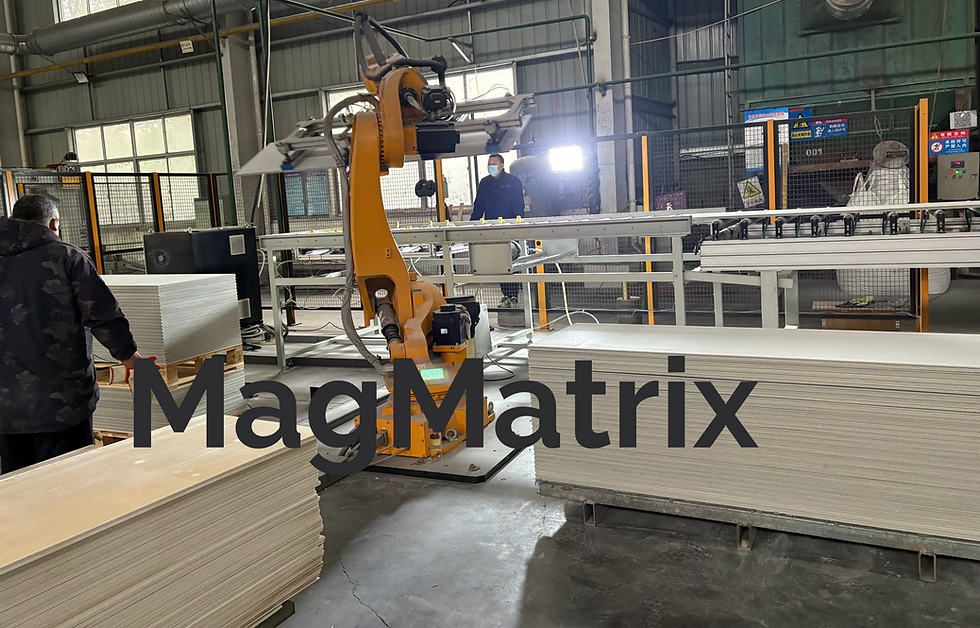
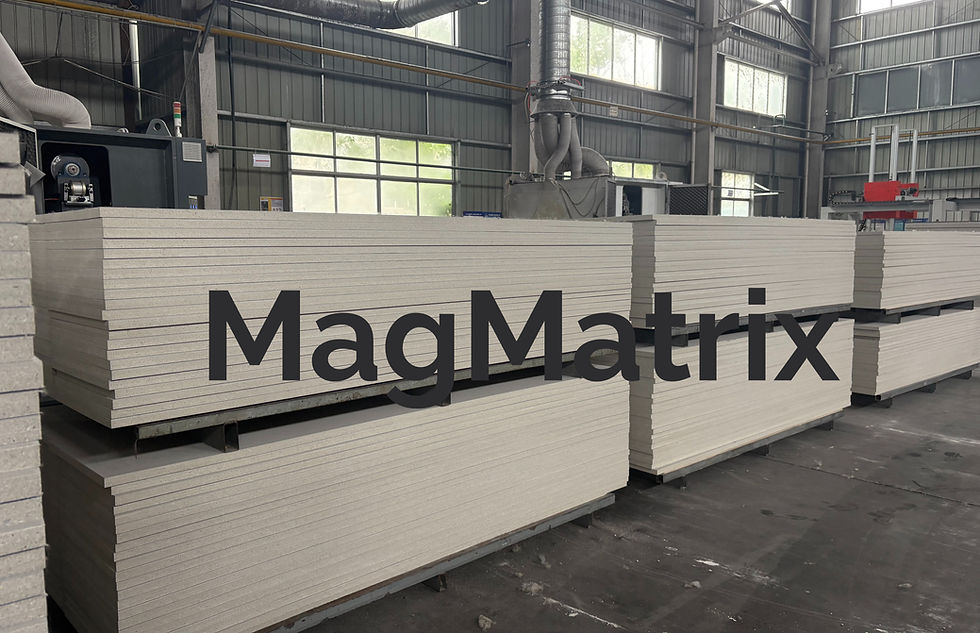
Quality magnesium oxide boards depend on manufacturing excellence. The boards' impressive performance comes from a carefully controlled production process. Each stage of precision determines the reliability of the final product.
Calcining temperature and MgO reactivity control
The calcination process determines magnesium oxide reactivity - a key property that affects board performance. Quality boards need light-burned (reactive) MgO, which requires calcination between 700-1000°C. MgO becomes highly reactive with surface areas over 25 m²/g when temperatures stay below 900°C to preserve pore structure.
Temperature control shapes both crystallinity and reactivity. MgO crystallite sizes grow as calcination temperatures rise from 400°C to 600°C, while surface areas drop from 127.88 m²/g to 86.45 m²/g. Manufacturers must monitor this relationship between temperature and reactivity throughout production.
Calcined MgO begins to hydrate and carbonate when exposed to air, altering its reactivity. The best manufacturers monitor chemical reactivity during storage to maintain consistency.
Curing protocols for dimensional stability
Board quality also depends heavily on curing. The best magnesium boards undergo hot, low-humidity curing followed by controlled conditioning before final processing. This two-step process will give a stable board size and prevent internal flaws or moisture reactions.
Research shows that MgO hydration rates differ between curing at 65°C and 85°C. MgO in cement paste reaches about 70% hydration within three days under the best conditions at 85°C variable temperature curing. The hydration rate then levels off, making the initial curing conditions critical to the board's long-term performance.
Some lower-quality manufacturers cut corners by curing MgO panels outdoors for just a few days. This results in inconsistent properties, and panels may arrive with inches of water pooled at the container bottoms.
Batch testing: ASTM C1185, D1037, and chloride content
Quality assurance needs rigorous batch testing. Every batch should undergo these minimum performance tests:
Property | Testing Method |
Flexural Strength | ASTM C1185 |
Fastener Withdrawal | ASTM D1037 |
Moisture Absorption/Movement | ASTM C1185 |
Free Chloride Ion Content | Titration (Mohr's method) |
Free chloride testing is vital because chloride levels affect long-term durability. Quality magnesium boards usually have water-soluble chloride content between 1.04% and 3.16%. Testing follows standard methods like BS 812: Part 117:1988.
The best manufacturers use two-tier quality control systems to check performance at both manufacturing and distribution stages. This "trust but verify" approach ensures boards meet standards despite international supply chain challenges.
Challenges and Opportunities in Market Adoption
MgO boards deliver impressive performance, but manufacturers must address several market adoption challenges as they expand into green building applications.
Weeping and corrosion from unreacted MgCl2
The biggest problem with magnesium oxychloride (MOC) boards is the "crying" or "sweating" issue. Unreacted magnesium chloride pulls moisture from humid air and creates chloride-containing water droplets on the surface. These salty droplets can cause mold to grow on nearby timber elements and corrode metal fasteners, fixtures, and steel studs. Tests show that MOC boards deteriorate within 57 days of exposure to high humidity. Magnesium oxysulfate (MOS) boards perform better and show no crying behavior even after two years in 90% relative humidity.
Supply chain dependency on Chinese manufacturers
China accounts for nearly 70% of global magnesium production. This creates supply chain risks for the MgO board market. Raw material shortages pushed magnesium prices up by more than 50% in 2022 compared to 2021. North American markets rely heavily on overseas manufacturers. This results in extended lead times, costly shipping, and quality-control issues. Government projects often avoid these products because of this dependency.
North American production and two-tiered QC systems
Local manufacturing offers a growing solution to these challenges. Customers have consistently requested local MgO panel production over the last 15 years. Leading manufacturers now use two-tier quality control systems. They check performance at both the manufacturing and distribution stages. This helps fix quality issues common in imported products. Problems include inconsistent performance, material damage during shipping, and composition differences even from the same supplier.
Conclusion
Magnesium oxide boards are a most important breakthrough in sustainable building materials. These boards excel in fire resistance, moisture management, and structural integrity, which makes them valuable for green construction projects. Additionally, they create healthier indoor spaces by emitting no VOCs and naturally resisting mold and mildew.
Progress from traditional magnesium oxychloride (MOC) to improved magnesium oxysulfate (MOS) and magnesium phosphate cement (MPC) systems reflects continuous innovation that addresses longstanding problems. Modern MgO boards now deliver exceptional mechanical properties without the "weeping" problems that affected earlier versions.
The market still faces significant challenges to widespread adoption. Chinese manufacturing dominance creates supply chain risks, while quality control issues have shaken buyer confidence. All the same, North American production facilities now use strict two-tier quality control systems, pointing to a more reliable future for this material.
More architects and builders now see the value of MgO boards. These boards offer balanced vapor permeability, quick drying, and high fire ratings, addressing many building envelope design challenges. Their stable dimensions and strong fastener grip make installation easier and ensure lasting structural strength.
The push toward eco-friendly construction makes magnesium oxide boards a vital component in sustainable building design. These versatile panels will, without doubt, shape the future of healthier, stronger, and environmentally sound structures across North America as local manufacturing grows and quality standards improve.
Comments