
Comparative Analysis: Fiber Cement Board vs. MgO Board Subfloors

When selecting high-performance subflooring, Magnesium Oxide (MgO) boards often prove superior. They demonstrate superior fire resistance compared to fiber cement boards and offer exceptional moisture control. While the initial investment for MgO boards may be higher, the reduction in long-term repair and maintenance costs frequently offsets the upfront expense.
Furthermore, MgO boards are an environmentally sustainable choice, characterized by a lower carbon footprint and recyclability. In contrast, fiber cement boards require specialized tooling and dust-mitigation strategies during installation, which can delay project timelines. Ultimately, material selection should align with specific project requirements, budgetary constraints, and environmental conditions.
Key Takeaways
Optimal Performance: MgO boards are highly recommended for subflooring in high-humidity or fire-prone environments due to their superior resistance properties.
Cost Efficiency: Fiber cement boards offer a lower initial price point; however, they may incur higher maintenance and repair costs over time, particularly in moisture-rich settings.
Longevity: Both materials offer substantial lifespans when installed correctly and maintained properly, though MgO boards typically retain value longer with reduced maintenance requirements.
Sustainability: MgO boards are the environmentally preferable option, offering a reduced carbon footprint and full recyclability.
Installation: MgO boards are lighter and easier to cut, reducing labor time and effort compared to the heavier and more difficult-to-process fiber cement boards.

Material Overview for Fiber Cement Board Subfloors
Fiber Cement Board
Fiber cement board subfloors are the staple in residential and commercial construction, composed of cement, sand, and cellulose fibers. These components are pressurized and cured to produce robust, flat panels that withstand daily wear. While fire- and moisture-resistant, fiber cement is porous and can absorb water over prolonged exposure. As a subfloor, it provides a solid substrate for tile or wood. It is often selected for its cost-effectiveness and load-bearing capacity, though it is susceptible to cracking under excessive weight. Installation requires specialized tools, and safety protocols must be strictly followed due to the generation of hazardous dust.
Professional Recommendation: Before procurement, verify the board's thickness and density; thicker panels provide greater structural stability.
MgO Board
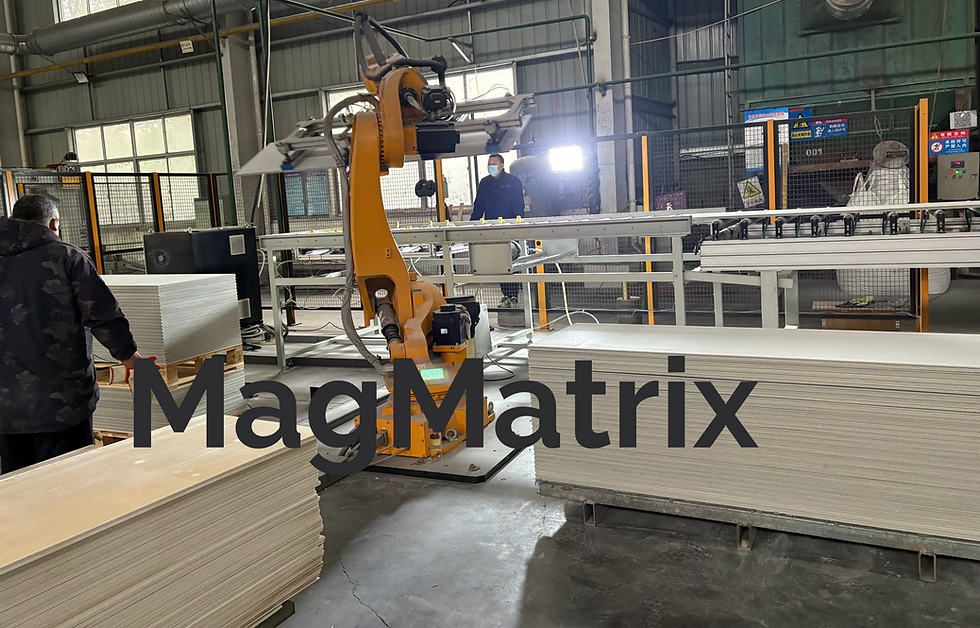
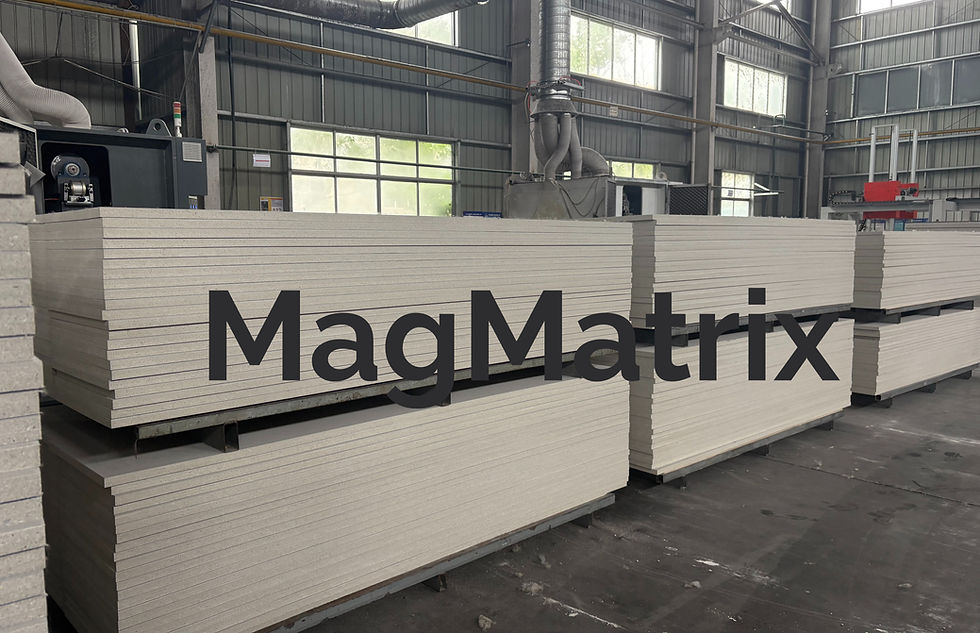
Magnesium Oxide (MgO) board is engineered using a distinct composition centered on magnesium oxide minerals. Reinforced with perlite, vermiculite, wood fibers, and fiberglass mesh, the boards are bound using magnesium sulfate or magnesium chloride.
Raw Material Composition:
Raw Material | Description |
Magnesium Oxide | The primary component is derived from magnesium-rich minerals, providing strength and stability. |
Fillers | Perlite, vermiculite, wood fibers, and fiberglass mesh enhance performance characteristics. |
Bonding Agents | Magnesium sulfate or magnesium chloride acts as the binding agent. |
Manufacturing Process:
Precise measurement of raw materials.
Blending into a homogenous slurry.
Layering the slurry with fabric and fiberglass mesh.
Initial curing via heat and moisture application.
Demolding.
Ambient temperature curing.
Drying to eliminate excess moisture.
Precision cutting to specification.
MgO boards are characterized by high fracture resistance, exceptional fire and water resistance, and high load-bearing capacity. While the initial capital expenditure is higher, the extended lifespan and reduced maintenance requirements provide significant long-term value.
Comparison Table:
Feature | MgO Boards | Fiber Cement Boards |
Durability & Strength | High impact resistance; supports heavy loads. | High strength; susceptible to cracking under excessive weight. |
Fire Resistance | Superior fire and heat resistance. | Fire-resistant, though generally lower rated than MgO. |
Moisture Resistance | Impervious to mold; excellent water damage prevention. | Water-resistant but porous; susceptible to absorption. |
Cost | Higher initial cost; superior longevity. | Lower initial cost; potential for higher long-term repair costs. |
Durability
Impact Strength
Subflooring must withstand significant static and dynamic loads. MgO boards are distinguished by high impact strength, resisting cracking even under heavy stress or impact. This makes them suitable for high-traffic commercial and residential applications. Fiber cement boards provide adequate strength but are prone to cracking under heavy loads or impact. Over time, uneven subfloor support can lead to micro-fractures in fiber cement panels.
Longevity
Long-term structural integrity is a key performance metric. MgO boards are dimensionally stable and resistant to moisture-induced warping or swelling. Conversely, fiber cement boards perform well in arid conditions but are hygroscopic. The cycle of absorption, swelling, and drying can compromise structural integrity, leading to cracks or failure.
Common Causes of Subfloor Failure:
Cause | Explanation |
Structural Deficiencies | uneven foundations or design failures leading to distortion and cracking. |
Moisture Cycles | Swelling and shrinking in fiber cement boards due to water absorption. |
Joint Integrity | Poor quality joint materials leading to failure points. |
Installation Errors | Improper design or execution resulting in joint cracks. |
Maintenance Protocols:
Fiber Cement: Requires annual cleaning to remove contaminants, repainting every 10–15 years, and yearly inspection of caulking and seals.
MgO Board: Requires minimal maintenance due to its moisture-impervious nature and resistance to cracking.
Note: With proper installation and maintenance, both materials can last decades, though MgO offers superior reliability in moisture-prone zones.
Moisture Resistance
Wet Environments
In high-humidity applications such as pools, saunas, bathrooms, and commercial kitchens, moisture resistance is critical. MgO boards are impervious to water, retaining their shape and structural integrity without warping, swelling, or delaminating.
Fiber cement boards are water-resistant but not waterproof. Prolonged exposure can lead to saturation, deformation, and cracking. In damp environments, additional waterproofing membranes or sealants are often required for fiber cement installations.
Performance Comparison in Wet Conditions:
Material | Moisture Resistance | Lifespan (Wet Conditions) | Mold Resistance |
MgO Board | Excellent; maintains integrity in saturation. | > 30 Years | Inherently inhibits mold/mildew. |
Fiber Cement Board | Moderate; susceptible to deformation. | Variable | Superior to drywall, but surface mold is possible. |
Mold and Mildew Mitigation
MgO boards are inorganic, eliminating the food source for mold and mildew. This creates an environment in which fungal growth cannot occur, even under high humidity. Fiber cement is also essentially inorganic and resistant to internal mold growth; however, surface organic debris can support mold growth if not cleaned regularly.
Key Insight: Industry experts strongly recommend MgO boards for high-humidity environments to mitigate moisture-related pathology and structural degradation.
Fire Safety
Fire Resistance Ratings
While both materials offer fire resistance, MgO boards provide superior protection. They are classified as non-combustible and can withstand extreme temperatures without losing structural integrity.
MgO boards consistently achieve Class A ratings in ASTM E84 testing (low flame spread/smoke development) and are classified as non-combustible under EN 13501-1 and ASTM E136 standards. Fiber cement boards are fire-resistant but may not perform to the same standard under extreme fire loads.
Certifications
Verification of fire safety certifications is essential for code compliance.
Common Standards:
Certification | Scope |
CE | European health, safety, and environmental protection standards. |
ISO | International quality management standards. |
INTERTEK | Total Quality Assurance testing. |
ASTM E84 | Surface burning characteristics (flame spread/smoke). |
EN 13501 | European fire classification. |
UL 723 | Surface burning characteristics. |
Professional Recommendation: Please always ask for documentation of fire ratings (e.g., ASTM E136, EN 13501-1) to ensure compliance with local building codes and safety requirements.
Health and Safety
Indoor Air Quality (IAQ)
MgO boards are formaldehyde-free and have near-zero Volatile Organic Compound (VOC) emissions, contributing to superior indoor air quality and reduced health risks.
Property | MgO Board Impact on IAQ |
Formaldehyde | Free of formaldehyde. |
VOC Emissions | Negligible. |
Overall Impact | Improves IAQ; reduces chemical exposure risks. |
Fiber cement boards are generally safe but pose a significant respiratory hazard during installation due to the release of crystalline silica dust when cut. Strict adherence to safety protocols is required.
Handling and Installation Safety
Both materials generate dust during processing. Safety protocols must include:
Eye Protection: Safety goggles to prevent debris injury.
Respiratory Protection: N95 masks or respirators to prevent silica/dust inhalation.
Dermal Protection: Gloves to prevent abrasions.
Ventilation: Use of dust extraction systems or working in well-ventilated areas.
Environmental Impact
Sustainability
MgO boards represent a more sustainable construction material. Their production requires less energy and water compared to fiber cement. The curing process of MgO captures carbon dioxide via carbonation, reducing the overall carbon footprint. Additionally, they are composed of mineral-based, recyclable materials.
Fiber cement production is energy-intensive, primarily due to cement manufacturing, which accounts for a significant portion of global CO2 emissions. Fiber cement is also difficult to recycle and typically ends up in landfills.
Environmental Comparison:
Aspect | Fiber Cement Board | MgO Board |
Carbon Footprint | High (Cement production). | Low (CO2 capture during cure). |
Resource Depletion | High (Limestone/Clay mining). | Moderate (Magnesite). |
Recyclability | Low (Landfill). | High (Recyclable). |
Toxicity | Potential for hazardous additives. | Non-toxic. |
Disposal
MgO boards allow for simpler end-of-life processing. They can be ground down and repurposed as raw material or soil amendments. Fiber cement boards face disposal challenges due to weight and composition, often incurring higher disposal fees and environmental impact.
Cost Analysis
Initial Investment
Fiber cement presents a lower barrier to entry regarding upfront material costs.
Material | Estimated Cost (per Sq Ft) | Estimated Cost (per m²) |
Fiber Cement Board | $5 – $14 | $6 – $15 |
MgO Board | Higher relative cost | $8 – $20 |
Lifecycle Value
Despite the higher initial cost, MgO boards offer superior lifecycle value. Their resistance to moisture, mold, and fire minimizes maintenance and replacement costs. Fiber cement installations may incur higher long-term costs due to repairs, sealants, and potential moisture remediation.
Installation Methodology
Tools and Expertise
Installation efficiency varies significantly. MgO boards can be scored and snapped using a carbide-tipped knife, similar to drywall, and are lighter to handle. Fiber cement requires specialized shears or saws and is significantly heavier and more brittle, increasing labor intensity and breakage risk.
Tooling Requirements:
Tool/Material | Function |
Carbide Tipped Scoring Knife | Efficient cutting of MgO boards. |
Dust Reducing Circular Saw | Mitigation of hazardous dust. |
Fiber Cement Shears | Precision cutting for fiber cement. |
Corrosion-Resistant Fasteners | Preventing rust in high-moisture boards. |
Polyurea/Epoxy Filler | Joint sealing. |
Potential Challenges
MgO Boards: Low-quality boards may exhibit "weeping" (salt migration) or excessive moisture absorption, leading to fastener corrosion. Sourcing from reputable manufacturers is critical.
Fiber Cement: Susceptible to breakage during handling; silica dust generation poses health and safety compliance challenges.
Application Recommendations
Fiber Cement Board
Best suited for high-load, dry environments where budget is a primary constraint.
Applications: Traditional residential flooring, mezzanine floors, commercial high-traffic dry areas.
MgO Board
Ideal for specialized applications requiring high performance in adverse conditions.
Applications: Wet areas (bathrooms, pools), fire-rated assemblies, sustainable construction projects, and underlayment for diverse flooring types (tile, wood, laminate).
Summary Selection Guide:
Feature | Fiber Cement Board | MgO Board |
Fire Resistance | High | Non-combustible (Superior) |
Moisture Resistance | Moderate | Impervious |
Weight | Heavy | Lightweight |
Eco Impact | Moderate | Low |
Frequently Asked Questions (FAQ)
What is the primary difference between fiber cement and MgO boards? Fiber cement is composed of cement, sand, and cellulose, whereas MgO boards utilize magnesium oxide and mineral fillers. MgO offers superior fire and moisture resistance compared to cement-based alternatives.
Are both boards suitable for bathroom installation? Yes, both are viable. However, MgO boards are preferred for wet areas due to their impervious nature. Fiber cement requires rigorous sealing to prevent water absorption and subsequent damage.
How does the MgO board impact indoor air quality? MgO boards are non-toxic, formaldehyde-free, and emit negligible VOCs, contributing to a healthier indoor environment compared to materials that may off-gas.
Which material offers the most straightforward installation? MgO boards are lighter and can be cut with standard scoring techniques, resulting in faster installation and less dust generation than fiber cement, which requires specialized cutting tools.
Comments